Margie Ulbrick Counselling

Relationship Counselling

Schedule an Appointment

Zoom and Phone sessions are available!

  • Home
  • About
    • Media and Links
  • Services
    • Couples Counselling & Marriage Counselling
    • Somatic Experiencing
    • Separation Counselling
    • Acceptance & Commitment Therapy
    • Mindfulness Training
    • Focusing
    • EFT: Tapping
  • Book
  • Blog
  • Success Stories
  • Contact

Happy Just Because Part 2

By Margie Ulbrick Leave a Comment

Einstein once said of his life, “the only thing I want to figure out is how to think like God thinks.” If this was God’s life how would God lead it? If these were God’s hands what would God do with these hands.

It is true that the happiest people in life are often those who have found some deeper meaning to which they attribute their life’s purpose. They often relate this to a spiritual if not a religious perspective. Of course there are the happy atheists but it remains true that many people find a deep solace and comfort for life’s struggles from being able to bring a spiritual perspective to bear on life’s challenges.

It seems that these happy ones have often found a way to bring the energy they need to cope with life’s curly ones from combining body mind and spirit in some kind of healthy balance. So, what of developing a spiritual practice which builds your happiness muscle? Well, many people pray or meditate and that offers them a deep sense of relaxation. This calm then fuels their responses and enables them to have a non reactive stance. By non reactive I mean they can choose their behaviours. They are not slaves to the programmes that might otherwise run or ruin their lives: the not good enough voice inside of me, the need for love and approval, for safety and security and the need for being in control.

After all, spirituality is about establishing a relationship with one’s self and the creative life force that is loving, and it is also about surrender and non attachment to outcome. Perhaps this is why happy people are often spiritual ones. They do not try and control life but rather go with life’s flow and energy. They do not need to react emotionally and take offence at criticisms, perceived and otherwise. They have an internal base which is secure. That is, they know to their core that they are loved unconditionally already. Who wouldn’t want the riches of the spiritual life! They are certainly good building blocks for happiness, maybe even joy. The joy that comes regardless of external circumstances.

© Margie Ulbrick

If you would like some support with your relationships or creating greater happiness in your life, please contact me on 0403 814 477 for a free 10-minute consultation to discuss your needs.

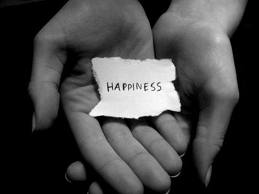
Happy Just Because

By Margie Ulbrick Leave a Comment

In this article I will outline some tips on how to build your happiness muscle. Did you know that if you win tattslotto tomorrow it is very likely that in a year from now you will be no happier than you are today? Sounds unbelievable doesn’t it. But it’s true. This is because we all have what psychologists call an inbuilt happiness set point. Our external situation actually doesn’t define our happiness. Have you ever had the experience of working really hard to achieve some goal or another, only to find that when you got what you wanted, the goal posts shifted? We live in a culture that dictates external markers of success: going higher and higher on the corporate ladder, building bigger and better houses or improving the ones we have, making more and more money, having better and better holidays. The list is endless and can easily be substituted for the success of our children, our body images and appearances. No sooner do we reach one pillar of “success” than we find ourselves striving and searching for the next allusive hit or kick. Yet 40% of people on the world’s wealthiest list are more unhappy than the average person.

It is our mind, our attitudes, belief systems and values that creates a framework for happiness. It follows then that happiness is a learnable skill for we can change our attitudes and we now know, thanks to recent discoveries of neuroscience, that we can reprogram our brains.

So what are the qualities that happy people have that set them apart from others? Happy people take responsibility for their happiness. They do not play the complain, blame and shame game. They do not participate in the “poor me” victim story and they have let go of the “why me?” paradigm.

According to Marci Shimoff who has created a model for happiness which she entitles “Happy for No Reason,” research has shown that happy people generally have some definable qualities:

• Happy people are light, they radiate a quality of being easy going, of not taking themselves too seriously.
• They are able to live now: that is they live in the present moment. They do not spend their lives consumed by anxiety about the past or the future. You might say they adopt the motto of “yesterday is history, tomorrow is mystery, today is a
gift”.
• Happy people are passionate. They generate an enthusiasm wherever they go, they give off an energy that says they are excited about life.
• Optimistic about giving and receiving support, happy people expect the best. They focus on solutions not on problems and here you might say they adopt the motto of “be part of the solution not the problem.” They look for the lessons and opportunities in any given situation, and believing that all experience can be a learning experience, they are able to be at peace with what is.

Happiness then it seems can be a decision. Happy people cultivate an acceptance which reduces their resistance to life and increases their flowing with life. We can increase our capacity for happiness thereby creating a foundation for building a happy life. The Dalai Lama believes that a kind of stable inner happiness is obtained by approaching life with an inner attitude of moving towards life rather than away from it, which he says can have a very profound effect on making us more receptive and open to the joy of living. Perhaps the last word can go to Stephanie Dowrick renowned writer and psychotherapist who says in her book Choosing Happiness Life and Soul Essentials “In taking responsibility for your own happiness you are waking up your will to be happy. It doesn’t mean that you will be innately cheerful from this day forward. It does mean though that happiness (trust, inner confidence and wellbeing) can become your basic stance. In the countless moments of choice you will choose to pay attention to what is positive rather than negative, to what is possible; to what is connecting; to what is uplifting; to what is fair and just – even “good”.

© Margie Ulbrick

If you would like some support with your relationships or creating greater happiness in your life, please contact me on 0403 814 477 for a free 10-minute consultation to discuss your needs.

Happiness: 8 Tips to Becoming Happier: A Spiritual Approach to Happiness.

By Margie Ulbrick Leave a Comment

Psychologists say we have a happiness set point. This means that we have a basic level of happiness or unhappiness that we have been conditioned to expect in our life no matter how our external circumstances change. So if we want to become happier, to raise our happiness set point, we have to create habits of happiness: that is we need to consciously choose the path to move us in the general direction of greater happiness. Below are 8 points that will help increase your set level of happiness and build healthy happiness habits.

1)    Gratitude: be grateful for every single circumstance of your life and let it be used for your growth. When we accept adversity and good fortune and look upon them in the same way the shift towards happiness is internal. Nothing and nobody can take that away from us. It is our reaction to what happens that causes us pain. When we accept that we don’t have to understand everything but to be at peace with what is, our happiness is internal, not dependant on external circumstances. So practice being in a state of gratitude. Start a gratitude or grace journal. Track every day all the things you have to be grateful for. You may start with small things and it may be difficult at first if you feel knee deep in problems. All the more reason to practice being grateful and the more you consciously become aware of the multitude of ways in which you are already blessed, the more your enthusiasm will grow. What you focus on increases. What you notice expands.

2)    Follow your passion and find your life purpose. Don’t finish your life and ask what if my whole life has been wrong? Instead have the courage to lead your own life, not the life you think you should, according to society or parents or any other conditioning that takes you away from your true purpose. Find something that you love and move towards it. Head yourself in that direction even if you think you may not be able to get there. So if you want to be a painter but you have no time and need to keep working to provide for your family, you can still borrow books from the library on painting or you may be able to set aside just an hour a week to put colour on the page from home. Fall in love with the process not the end goal. Just knowing you are taking even the smallest steps to do more of what you enjoy will make a difference to your happiness. Happiness is made up many tiny little habits that in the end all amount to something. “Advance confidently in the direction of your own dreams and follow a life which you have imagined, you will meet with a success unexpected in common hours”. Thoreau  If you find that you are in a place of sadness or depression,  know you only have to take tiny baby steps in the direction of what you might enjoy. Try taking one short walk or savouring small mouthfuls of delicious sustaining food. Just choose one thing that you could imagine you might enjoy and experiment with that. Then if it makes you feel a bit better, do more of that!

3)    Spirituality. The greatest hunger we human beings have is the hunger for meaning. Once your life has meaning you realise you are not alone and you increase your levels of happiness and contentment. There is no place that God is not. There is a source from which all creation emanates and to which all returns. . When we remember this, happiness seems to just show up and we find ourselves bubbling up with joy or our eyes filling with tears for no apparent reason other than we realise the miracle that is life. Let the divine grow in you. Commit to living a spiritual life. Become attuned to how spirit works in your world. Go outside and observe a blossom tree, listen to the birds, watch a sunset. Become aware of how much you already have and give your attention to that because what you pay attention to grows. Take your eyes off yourself and ask how may I serve? The only way to find a deep peace is to become comfortable with silence. It has been said that we are spiritual beings having a human experience. It is the spirit that gives life. We will find joy and love in allowing the spirit to have its proper place in our lives. This will orient us towards service and connection and the only true question for our lives becomes how well do we give and receive love. So decide what really matters. It is only the ego that leads us to the false programming of society: distinctions such as success/failure, paradigms of materialism, consumerism, achievement/outcomes and so forth.

4)    Practice present moment awareness. The past is gone the future may never eventuate. If you take up now with the past that’s called guilt, the future: worry. We really only ever have now. You can choose to live your life in fear of the future and anxiety and stress, or in resentment and bitterness about the past. Or you can choose to live in the present moment. However it is enthusiasm, hope, trust, gratitude, acceptance and peace which will put you in a high energy state and move you in the direction of happiness. St Francis of Assisi said “Where there is darkness let me bring light, where there is hatred let me bring love, where there is despair let me bring hope, injury, pardon; sadness, joy.” Be the person to bring love, forgiveness, light and joy. Don’t be prepared to give away or waste your present life currency in resentment, anger, or blame and wishing things were different from how they are.

5)    Acceptance. “Lord grant me the serenity to accept the things I can’t change, the courage to change the things I can and the wisdom to know the difference.” In order to embrace life and to be happy we need to accept what is; it is only then that we can change and move in a different direction. While we fight and resist the situation of our lives we set up a dynamic of conflict and stress. Change the way you look at things and the world you live in will change.

6)    Forgiveness. Many are unwilling to let go of the past. They are still hurting in the present for something that happened eons ago. What a waste of precious living is taking place. When we forgive ourselves and others we undo the power of the ego and we take the energy from the story to which our mind has attached itself like glue. Be aware of the triggers of the ego: fear, judgement, attack, anger, guilt and then move forward in the light of love and truth.  Forgive yourself for the projections you have made, the judgements on others and yourself. There is a Hawaiian prayer called “Ho-opono-pono” which can help us move through the process of forgiveness and is very simple. It goes like this: I’m sorry, Please forgive me, I love you and I thank you. We apologise for the judgements we made, we seek forgiveness of others and ourselves for the same, we release them and ourselves into the power of love and we thank them for this particular opportunity for growth. When we enter into this process of forgiveness we undo the power of the ego to keep us separated, divided and keep us locked in judgement.

7)    Honesty. Look at whatever comes up honestly and without judgement. Whatever emotion arises from within you, allow it to be present, to notice it and to look at where it comes from. Welcome feelings of sadness and joy equally, don’t judge what comes up but practice allowing yourself the respect of honouring yourself and your process. When you have learnt what you need to, let it go. Emotion is just energy that needs to keep flowing. It gets stuck when we resist it.

8)    Take responsibility. It has been said that the greatest gift we humans have is our capacity to choose. We only need to say Yes! We only need to practice being present in any given moment as truly and honestly as we are able. When we fail to show up, when we are preoccupied or reactive, we miss out on the moment. And then we notice gently and begin again. When we are able to experience our capacity to choose, we are really taking full responsibility for the lives we live. It is similar when we allow others to walk their own path in loving respect, taking the focus off changing their behaviour and being responsible only for our own.

When we look into our own lives reflectively and take appropriate action accordingly, we will raise our happiness set-point. We can build our happiness muscle by working on creating habits of happiness some of which are outlined above. But perhaps of greater significance is that we will be living the path of love. Love of ourselves and those with whom we share our lives; which we know and trust in the end will be the ultimate source of true happiness and provide the very ground of our being.

© Margie Ulbrick

For more valuable relationship advice or to make an appointment  for singles or couples counselling in Melbourne,  speak with Margie on  0403 814 477.

m:0403 814 477

Fathers and Sons

By Margie Ulbrick Leave a Comment

The job of fathering a teenage son these days can be so demanding. Teenage sons and their fathers sometimes seem to drive each other crazy. During this time of adolescence the young boy often gives the impression he thinks he knows everything and his father knows nothing. It can be a great challenge for a dad to guide his son through these transition years.

Here are a few suggestions that may help a dad in developing his relationship with his son.

Adolescent boys have a very short attention span and quickly turn off when being “lectured”. So it helps to speak calmly, even when angry. Fathers need to speak out their anger – not act it out – because boys need to feel safe around their dads.

They need to see that their fathers can share their feelings and their fears without getting anxious. They need to see that their dads can express their feelings appropriately. Many men, and indeed adolescent boys, seem to act in an angry way when in fact they really feel sad, afraid or just unsure. Fathers have an important role to play in teaching their boys to express a range of healthy emotions and this is best done by the example they set.

The teenage male energy seems to never stop. It is impulsive and explosive. Fathers need to be able to model self control, and to teach their sons the very important lesson of knowing when to stop. They do this when they understand their own strength, both physically and verbally, and can show restraint when needed.

They can teach their sons about respect for women and about respect across a whole range of areas, especially in their treatment of the vulnerable, the elderly, little children and other races and cultures. They can teach them to carry their strength with leadership, and with the ability to be gentle.

Sport can be a big part of the teenage boy’s world and this can be a good opportunity for fathers to connect with their sons if they share this interest. It can be a time to come together to kick a ball or to show support and encouragement by coaching, getting involved in, or just being there to watch their sons play sport. Sport can be a good teacher and a father can take the opportunities here to teach the lessons that build character, develop masculinity and encourage participation and excellence.

It can be as simple as a father giving the message that it’s okay to “have a go” even if you don’t make the “A” team. On occasion in my own sons’ lives, I have witnessed sporting coaches who are determined to win at all costs. They can display an attitude that is rude and demeaning to less successful players and sometimes have even been overtly abusive. In contrast to this is the dad who gives his son the message that it’s okay to do what you really enjoy, even when others might suggest you should do only the things you are really good at.

Fathers can teach here about the importance of balance in life. They can teach sportsmanship and can encourage their sons to take care of their bodies and their health in relation to sport. Some of the negative characteristics often associated with spectator sport can be binge drinking, sexual crudity, aggression and egotism. Men model their attitudes to these cultural issues and adolescent boys pick up their father’s idea of masculinity.

Probably the most important thing a father can do is praise his son. So often boys feel like they just can’t match their fathers’ expectations, and this can be something that has been communicated non- verbally. Fathers can really afford to be generous in their affirmation of their sons because boys really need this. They need as much affection and praise from their dads as they see their dads giving to their sisters. Sons crave the approval of their dads and can unfortunately be left with the message that they can or should always be doing better than they are.

In reality, fathers have a delicate line to walk: to communicate love and admiration whilst encouraging and supporting their sons to grow into the beautiful young men they are destined to be. It’s a tricky time as a boy can give the impression that nothing a dad can say can have any significance for his life. As their dads come down from their pedestals from the earlier, more innocent, adoring years, sons can treat their fathers with nothing short of contempt. And so a father must patiently and consistently set out the ground rules and reinforce again and again what is expected.

A dad must let his son go through this stage in his own time, continuing to respect and connect with him wherever possible. In this way he can support his son in his journey to manhood. In doing this he provides the structure his son so desperately needs. Hopefully then, the young boy evaluates his place in the scheme of things, and works out for himself a plan for his future, and his connection to the world, to his God and to his soul.

©Margie Ulbrick

If you would like some support with your relationships or creating greater happiness in your life, please contact me on 0403 814 477 for a free 10-minute consultation to discuss your needs.

« Previous Page
Next Page »
Empower-Mindful Relationships-cvr-v3 with blurb

A practical guide for using mindfulness to enrich relationships and effectively manage stresses associated with conflict. The authors explore how we can use mindfulness to develop a more compassionate, friendly relationship with ourselves and others; communicate more effectively; reduce defensive patterns; and work effectively within couples, families and workplaces. Case studies highlight key principles, while practical exercises enable the reader to develop their mindfulness skills.

Find Out More About The Book

Margie Ulbrick has appeared in:

About Margie Ulbrick Relationship Counselling

Margie Ulbrick relationship counselling provides psychotherapy services for relationships, stress management and happiness. Margie Ulbrick Counselling offices are based in East Malvern, Melbourne and service the surrounding areas of Chadstone, Glen Iris, Armadale, Ashburton, Malvern, Carnegie, Kew, South Yarra, Toorak, and East St Kilda. Read more about Margie Ulbrick Relationship Counselling.

Visit my profile on YourTango Experts

Looking for something?

Contact Margie

M: 0403 814 477
E: [email protected]

© 2026 · Margie Ulbrick Counselling · Website by Sonja Meyer